Wednesday, 6 March 2024

One child at a time: reflections on a conversation in Lusaka


I’m now in Lusaka, Zambia, home to CRED Partners Aaron and Josephine and their ministry ‘Full Proof Mission’. The main arm of this ministry, and the arm that CRED has most involvement with, is their work with street children in seeking to support those who live on the streets for various reasons and also helping children get off the streets and back home.

Tomorrow I’ll be visiting the projects in action, but today we sat and had a very insightful conversation about the current realities of working with street children. There are many reasons that the children end up on the streets, but the main ones are poverty, family breakdown, or issues relating to the lack of relationship between child and step-parent. This is often exacerbated when a new baby is born to the parent of the child and the step-parent; at that time sadly children from previous relationships can often be thrown out.

So, for various reasons, the child ends up on the streets, very vulnerable, traumatised and at risk of exploitation. It is at this time that there needs to be some well-planned, child-focused initiatives to immediately provide support and safety for the child. Chisomo tries to provide this through its outreach and drop-in programme (more of that another day), but unfortunately there are very few other agencies doing similar.

The police approach is more likely to beat the child and send them running, so that the child quickly becomes fearful of approaching the service that is supposed to provide protection. The government attitude tends to be to do intermittent ‘round up’s’ of the children – gathering them all into a truck, and taking them to a facility to be ‘processed’. Occasionally being processed does result in a child being reunited with home, but sadly the majority just end up spending a bit of time in the facility and then being released and returning to the streets.

I asked if there are any long-term strategies in place to try and solve the problems that are leading to children running to the streets in the first place. For example, support for parents re parenting skills; access to food parcels and educational support; other poverty reduction initiatives. Sadly, but not surprisingly, the answer was no, not really. There are some organisations that distribute food to those in particular need, and there are some charities (including Chisomo) that cover education fees for children on their books. But they are few and far between. And whilst the underlying causes for children going to the streets are not being addressed, the numbers will continue to grow.

Apparently two years ago the number of children on the streets was declining, which was very encouraging to see. But then Zambia, as with many other countries in the world, was hit by the perfect storm of reduced internal food harvest, increased food prices on the world market, increased fuel prices, and still trying to recover from Covid pandemic. Cost of living went up, poverty levels went up, and numbers of children on the streets went up.

It would be very easy to feel totally overwhelmed by the scale of the problem, and think that nothing can be done that will make any impact. But, just like the starfish story when the child saved one starfish at a time, so we can each do our little bit, and those little bits all add up. Chisomo is doing exactly that – not being overwhelmed by the enormity of the issue, but one child at a time, doing their bit to improve the lives of the vulnerable in their midst.

I’m looking forward to meeting some of those children tomorrow whose lives have been improved, and I thank God for Chisomo, for Aaron and Josephine and the rest of the team who are forging ahead doing what they can to make the world a better place, one child at a time.

Saturday, 2 March 2024

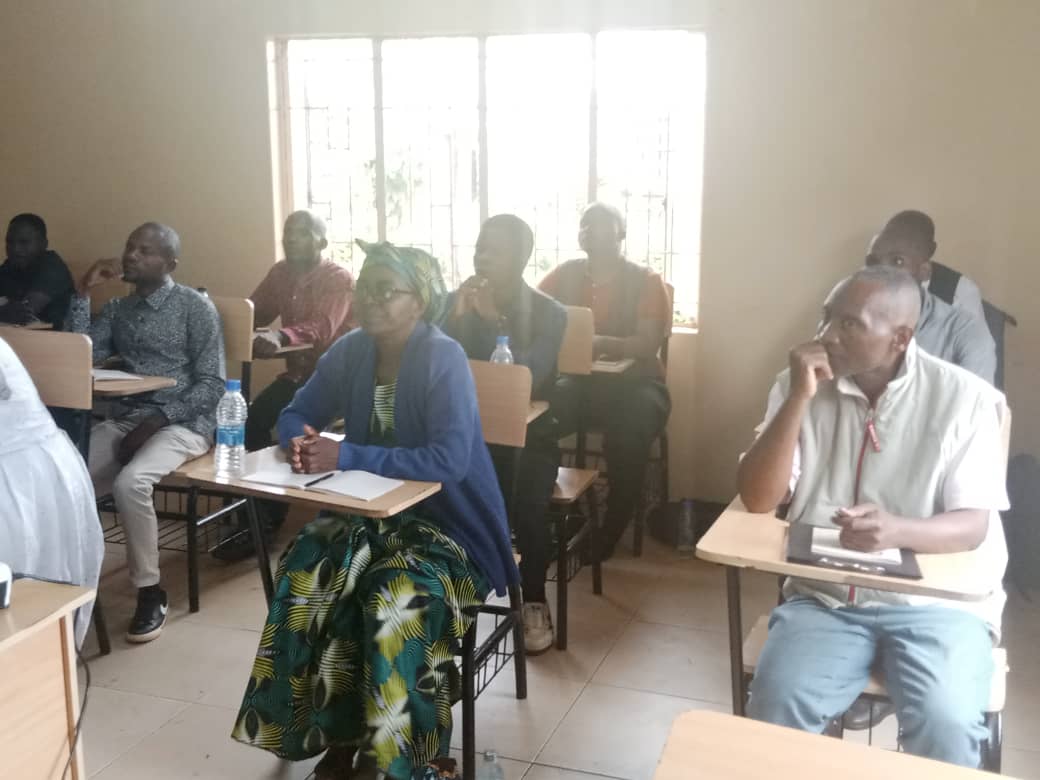
Delivering the training to Stepping Stones staff


Alice Leaper and I go back a long way, and I’ve been visiting her and her Butterfly Space projects (also a CRED Partner) in Malawi for several years. Some of those visits were with CRED teams, others were just me visiting the projects that come under the umbrella of Butterfly Space (which is a CRED Partner), and catching up with Alice.

The first time I visited the site of Stepping Stones primary school it was just a field, and Alice was sharing her vision for the school with me. The school was to be one that provided high-quality education for children of all incomes. One third would be fee-paying, one third would be sponsored, and one third would be given a free place, subsidised by the income from the other students. The classes would be small (ie maximum of 30, which is small by Malawian standards), and whilst the curriculum would still be Malawian, there would be a stronger element of play-centred learning for the early years.

The next time I visited, in 2018 (I think), some classrooms were built and the first year groups were starting to progress through the school. Then we had the pandemic and all travel ceased. Now I am back, and it has been beyond wonderful to see how much the school has grown. All the classrooms are complete and in use, there is a nursery class for 30 pre-schoolers, and there are three vocational classes (soon to be four) for those students who don’t feel academically able to continue to secondary education. NB students can be in their mid teens when they finish primary education, so it’s not that unusual for them to be embarking on vocational training at that stage. The classes are in hair and beauty, tailoring (including making school uniform), and basket weaving (including making baby baskets for a Butterfly project that delivers baskets full of baby items to new mums in hospital).

There is also a brand new library and IT suite, and next project is a hostel for the standard 8 students as they enter their final term and need a conducive environment for revising and preparing for their national school leavers primary certificate.

These past few days I’ve had the delight of working with the teachers and delivering the 360Life training to them. Many conversations have been prompted out of that training and the information that I have shared, and it’s been wonderful to help the teachers think through how to adapt their teaching styles as a result, and what it could look like to incorporate a trauma-informed approach to their school ethos. The conversations have included sad acknowledgment of the very tough situations that some of the children have to cope with at home, due in part to poverty, parents with alcoholic tendencies, and cultural norms that are more accepting of tough disciplining. But the teachers spoke of how they felt more equipped to respond positively and helpfully to these situations now, and the role that the school can play in helping the children to have a safe and healing environment in which to spend much of their waking weekdays.

I pray that as I journey on, the teachers will go into the new week with determination to put their words into action, and to adapt their practices to incorporate what they have learnt. Certainly the implications were that this is what will happen, and I Iook forward to receiving feedback to confirm as much. And maybe, God-willing, I’ll be able to come back and do round two of the training, to equip them more, and also to take the training wider into the community, which is their wish. 


Wednesday, 28 February 2024

First workshop in Malawi completed


These past three days I’ve had the joy and privilege of delivering a 360Life workshop to a select group of 13 members of Good News Global Malawi. Those present comprised the senior leaders of GNG in this beautiful country, and some other key prison chaplains and volunteers. There are so many more who wanted to be part of the training, but lack of budget got in the way, and so the focus instead was on really training up these few so that they are empowered to go out and disseminate the knowledge more widely.

There are a number of key take-aways from the 360Life training but this time round the one that really stood out as filling a massive gap in local knowledge and provision is an exploration of the links between mental health issues and trauma, and how to practise a more trauma-informed approach to ministry. This is obviously something that applied to the GNG folks, but there were also teachers from the college complex where the training was delivered coming in to ask if I could deliver the training to them, and one participant who is an ex-soldier said how much the security forces across the country also need it.

For the participants of this training, who spend so much time going into prisons and ministering to the inmates, many of whom demonstrate all sorts of mental health issues and challenging behaviours, this opportunity to explore things from a trauma-informed perspective was a real eye-opener and thought-provoker. I felt so incredibly humbled as I listened to them share about the conditions in the prisons, and the circumstances that they have to face, as well as the realities of life for the prisoners themselves. It is not unusual for 500 prisoners to be sharing a cell designed for 50, and as a result to have to sleep sitting up. And for hundreds to be trying to access one lavatory. Suicide rates are increasing at an alarming rate, both amongst prisoners and prison officers. Many prisoners experience several years waiting in prison before their case is heard, even if they are then found to be innocent, or with no charge to face.

The folk that I have spent the past few days with are an amazing bunch of people. I am in awe of what they do, as they live out this calling that they have on their lives. I pray that the training that I have been able to give, and the knowledge that I have been able to share, will have long-lasting and wide-reaching positive impacts, on them, on their families, on their colleagues, and on those whom they serve in the prisons.


Here are a few of the comments made in the evaluation that I think sum up how well received the training was:

‘The 360Life training was one of a kind and was just cool. It is very useful in the sense that it has enlightened me highly about mental health related issues. I am no longer the same and my ministry will no longer be the same again as I am going out very informed.’


‘The 360Life training is very informative and has helped me to open my mind to know more about mental health. After going through trauma healing subject, 360 has taken me deeper into knowing more of a person and how I can handle cases through counselling and guidance.

It will help to change my ministry in the sense that the new approach will be different from the past. I will be going back to prison well informed and knowledgeable.’


‘The training has been transforming and changing. The way I see people with problems with mental issues now is different. I am now more of a help to them than being judging.

I am going to use the material in my ministry and I hope that by the help of God more are going to be healed mentally.’


Lifting up prayers for the participants as they return to their homes and prepare to put the training into practice. Lifting up prayers for Malawi – the warm heart of Africa, but struggling so much with mental health issues, and a massive lack of resources to deal with it. And lifting up prayers that one day I’ll be able to return, for longer, to deliver more of the training to more of those who so desperately want it.


Sunday, 25 February 2024

Teaching in Malawi

 I've 360Life training to various audiences, visiting some CRED partners, and supporting a small team of adults who are coming to Uganda on a voluntourism week.

Tomorrow is the start of a 3-day 360Life workshop that I’m delivering here in Lilongwe, capital of Malawi. It’s for prison chaplains who are part of the Malawian branch of Good News Global, an international charity that seeks to take the gospels into prisons across the world, through word and deed, and I’ll write more about that as it progresses. But today I had a conversation which left me marvelling yet again at just indebted the world is to teachers, and the incredible work that they do in our society.

Whilst in Lilongwe I’m staying with McDonald and Catherine. McDonald is the Malawi national training director for Good News Global, and for whom I’m delivering the 3-day workshop. Catherine is his wife, and she works as a primary school teacher for primary 1 class in the local school. As we chatted, I asked Catherine a bit about her work and the realities of being a teacher in a government school. Her response left me dumbfounded!

Numbers wise, Catherine has 159 students in her class. Yes, that’s right – 159! I had to check three times to make sure that I wasn’t misunderstanding, but that was the number she kept giving me – 159. She did then say that the school have kindly given her a partner teacher, so now there are just 80 in her class, but even so – 80 kids in one class!

I asked how big is the classroom? Apparently, it’s normal size, but no desks as there isn’t room for desks, so all the children sit in rows on the floor. I asked about marking work – ‘oh I do it as we go along’ she said, ‘so that none of the children get left behind’.

I then asked if her class is an anomaly and if the others are all smaller sizes and more manageable – no, apparently each of the 7 year groups in the school is a similar size. So we are talking about schools that have thousands of pupils in them. And the government is doing nothing to try and ease the pressure – no campaign to rapidly build more schools, or train lots of extra teachers, just carry on as is.

The school day is 0730 – 1230, so I wondered if a shift system could be adopted with some children doing morning school and others doing afternoon school to reduce class sizes. Apparently that’s not likely to happen as most of the teachers do private tuition in the afternoon to children on parents who have the financial resources to pay for a tutor to come and supplement the learning of the morning. So the gap between have’s and have-not’s is just going to get wider.

I have always admired teachers for the incredible work that they do – giving tirelessly to support students in their learning and in their development as individuals, as well as all of the pastoral and extracurricular activities that are required of them. I have many friends who are teachers, and I know how hard they work, how much their family life suffers during term time when all focus is on keeping up to date with the massive pressures and workloads.

But today, my admiration went up another notch. Teaching 159 students day in day out – that takes dedication to the growth of the next generation to a new level.

The following photos are taken at the school where Catherine works (on a Sunday, hence lack of students), and includes some of the educational paintings on the walls of the school, so that learning never stops.